

Creamy, buttery hollandaise sauce is famously used as a topping for eggs Benedict, but it's also excellent over asparagus, breakfast hash, and more! Use an immersion blender to whip up this homemade hollandaise in under 10 minutes.

I learned to make hollandaise the "proper" way: By whisking egg yolks and butter over a double boiler until my arm gave out (*sighs dramatically*). It's a notoriously finicky process: Because hollandaise requires focused attention and accurate temperature control, it's easy to overcook the eggs and end up with a scrambled, curdle-y mess. (I am, unfortunately, speaking from experience.)
So when I started making foolproof hollandaise with an immersion blender, I never looked back. The blades of the hand blender make quick work of this emulsion, which saves time (and elbow grease!), reduces the chances of curdling or separation, and just generally gives us a much more reliable, consistent sauce.
One important thing: Like homemade bread, great hollandaise is 10% recipe and 90% technique. Please read this entire post before you start cooking, and pay special attention to the sections on equipment, ingredients, and temperature. And don't forget: The most important ingredient is PRACTICE.
A quick note about hollandaise
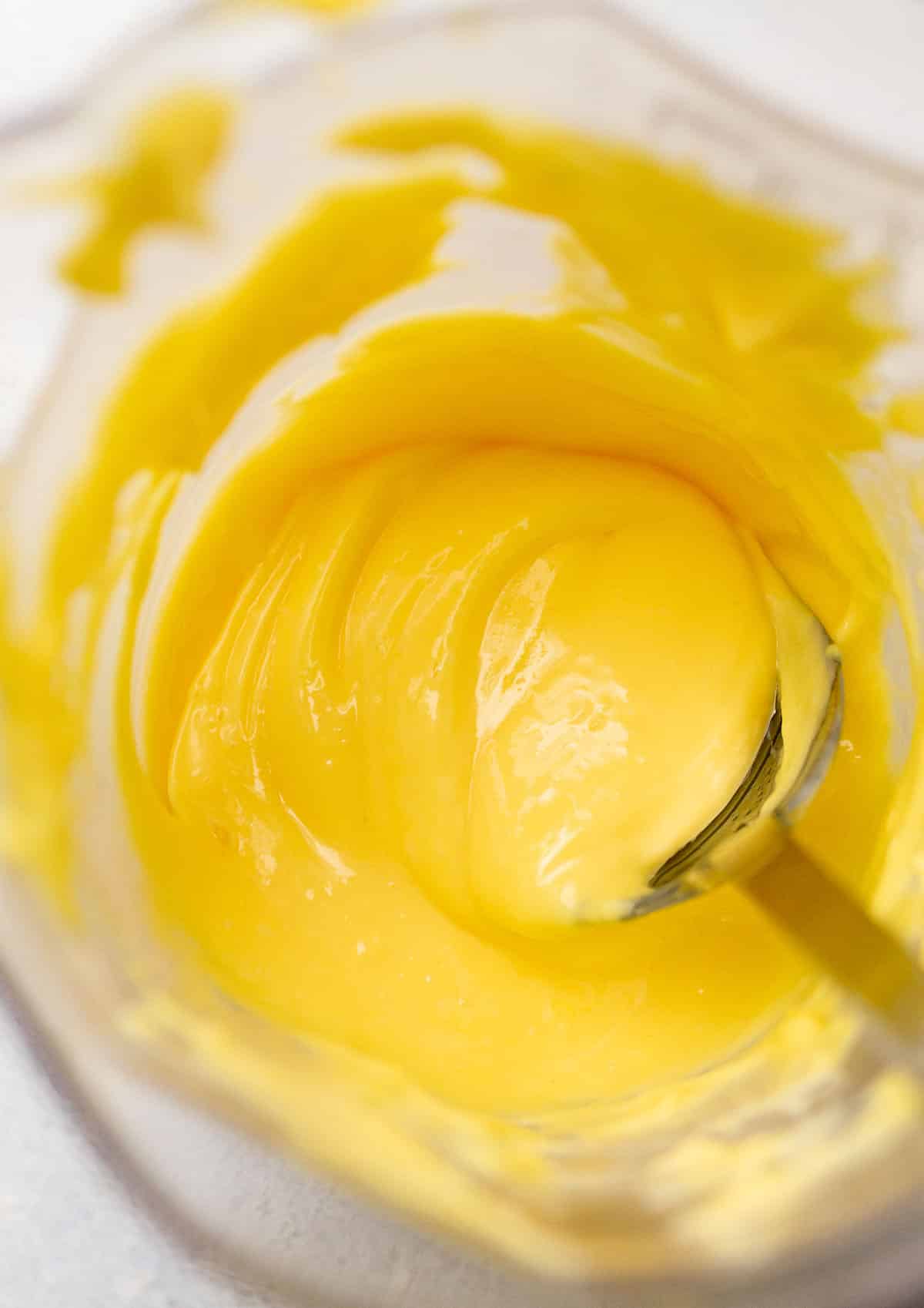
Hollandaise is a thick, creamy sauce that's served warm over things like eggs Benedict, grilled asparagus, or fish (we also love it with roasted broccoli or our leek breakfast hash!) Comprised primarily of egg yolks and melted butter, hollandaise is rich and velvety, with a glossy finish. Depending on the egg yolks you use, hollandaise can vary in color from a pale pastel yellow to to a deep, vibrant hue.
Pro Tip: Hollandaise is what's known as an oil-in-water (or fat-in-water) emulsion. It takes two ingredients that don't naturally want to mix and breaks them down into tiny droplets that eventually form a smooth sauce. Learn more: What is an Emulsion?
Equipment
You'll need an immersion blender and a tall jar that's just slightly wider than the blender's head. An instant read kitchen thermometer is also nice to have.
Since we're making a relatively small amount of sauce, it's best to blend in a tall, narrow container: This keeps the sauce contained in a thick layer, ensuring it fully covers the immersion blender head for thorough blending. (A large measuring cup or mixing bowl lets the sauce spread into a too-thin layer, making it difficult for the blender to "grab" the sauce and blend it properly.)
What container to use: Use a tall, narrow jar with an opening that is just wide enough to fit the head of your immersion blender. A wide-mouthed mason jar or a plastic deli container work well; we used the tall measuring cup that came with our immersion blender!
Ingredients overview

You'll find a detailed list of ingredients and exact quantities in the recipe card below. But before you jump in, we want to point out a few important things:
Egg yolks
- Raw egg yolks are our emulsifier: They make the hollandaise sauce velvety and smooth. Use large, high quality eggs that are fresh from the store for best results.
- Let egg yolks come to room temperature on the counter for 30 minutes or so before you make the sauce. This helps them cook evenly when blended with hot butter, and gives us a smoother sauce.
- Pro Tip: Save leftover egg whites for scrambled eggs or omelettes (or make Small Batch Chocolate Chip Cookies!)
Melted butter
- Unsalted butter is our go-to; this gives us full control over the seasoning. You can use salted butter if you prefer! Use real, high-quality butter for hollandaise (clarified butter is also excellent here if you have it!) We don't recommend using margarine or other butter substitutes, as they can be a bit unpredictable once heated.
- Use a small skillet or saucepan on the stove top to melt the butter (as opposed to using the microwave, where it's harder to control the heat). Melt butter over medium-low heat until it reaches a very low simmer (about 180-185° Fahrenheit), then transfer it to a measuring cup with a spout for easy pouring and use it immediately (don't give it a chance to cool down!)
Warm water
- Warm-to-the-touch water straight from the tap is fine (between 90° and 110° Fahrenheit, similar to what you'd use to proof yeast for bread baking).
Riffs and Substitutions
While hollandaise is pretty straightforward (it's more about technique than ingredients) it's important not to mess with this base recipe too much. A lot of changes can cause unsafe temperature fluctuations or make the sauce curdle (an egg yolk, for example, can only absorb so much butter before the sauce starts to break).
That said, there are a few small tweaks you can make if you'd like to play with the flavor of this sauce:
- Add spices! A pinch of cayenne pepper or smoked paprika adds a hint of spice to this sauce (we use this technique in our spicy andouille eggs benedict!) You can also add a pinch of nutmeg for an earthy, cozy note.
- Blend a handful of fresh herbs into your hollandaise sauce for color and brightness (basil, dill, parsley, tarragon, and chives are all wonderful).
- Add a dollop of dijon mustard when you blend the sauce: It adds depth and acts as another emulsifier to make your hollandaise silky smooth!
Step by step instructions
Blend the egg yolks

Add egg yolks to a tall, narrow jar with lemon juice, a splash of warm water, and a pinch of kosher salt.

Use your immersion blender to blend the egg yolk mixture for at least 30 seconds.
This important step incorporates some air into the mixture for a fluffier, creamier sauce. The speed of the blade also warms the eggs up a bit so they'll cook properly when the hot butter is streamed in.
Pro Tip: Move the immersion blender around as you go so it has a chance to "grab" onto all of the ingredients. This motion can take some practice: Don't worry if it splatters a bit or feels a little unnatural on your first try! Learn more: How to use an immersion blender.

As you blend, the egg yolks will lighten in color a little bit, and you'll be left with a thin mixture that has noticeable air bubbles across the surface.
Pro Tip: Blend the egg yolk mixture together while the butter melts on the stovetop!
Stream in the hot butter

With the immersion blender running, SLOWLY stream hot butter into the egg mixture. Add just a teaspoon or two of butter at a time, and blend well between each addition. Be sure to gently move the immersion blender up, down, and around as you blend to ensure the blades pull all of the butter into the sauce!
It's important to take your time here: The eggs need to be heated up gradually to prevent curdling, and there's also a limit to how much fat we can work into an egg yolk at one time without breaking the whole sauce. Stream the hot butter in slowly, blend constantly, and give the eggs a few seconds to fully absorb all the new butter before you add more.
What happens if I add the butter too quickly? If hot butter is blended into hollandaise too quickly, the sauce can break and scramble (and it may not thicken up properly!)

When all of the butter has been blended into the mixture, you should have a relatively thick, creamy sauce - almost like mayonnaise. You can serve a dollop of this ultra-thick hollandaise as-is, but we generally prefer to thin it out a little to make it easy to pour and drizzle.
Thin out the sauce

Add additional warm water to your sauce a little at a time, and blend until it reaches a drizzle-able consistency. Keep in mind that hollandaise will thicken as it cools!
Once the hollandaise is ready, it's time to serve! Pour it over your favorite breakfast hash or eggs benedict, add a drizzle to some grilled vegetables, or serve it alongside some roasted salmon.
Raw eggs and food safety

Consuming raw or undercooked eggs may increase the risk of food borne illness (Learn More: Eggs and Food Safety). If you prefer not to use raw eggs in sauces, we recommend skipping this recipe or trying a vegan hollandaise sauce!
Three tips for safer hollandaise
- Use your hollandaise as soon as it's blended! Blend your hollandaise last - once all of your other breakfast or brunch dishes are ready - and serve it immediately.
- Use hot butter (heated to a low simmer, around 180-185°F) to help the egg yolks cook as you blend the sauce.
- Let egg yolks come to room temperature for at least half an hour before blending your sauce; this helps them cook more quickly when you add hot butter.
- Use a kitchen thermometer. An instant-read kitchen thermometer is a useful tool. Double-check the temperature of the hot butter before you stream it into your sauce, and check the final sauce temperature to ensure it's hot enough before serving.
For a more thorough explanation of eggs and food safety, and for details on our recipe testing and fact-checking process, see the FAQs below.
FAQs
In these photos, we used organic brown eggs with very yellow yolks. The result is a bright, vibrant yellow hollandaise. When we tested this recipe with cage-free white eggs from the grocery store - which had much lighter yolks - the hollandaise sauce was a very pale yellow.
Egg yolks vary in color quite a bit, which will impact the final color of your hollandaise. Don't worry if yours is more pale (or more saturated!) it'll still taste great.
If your hollandaise is runny, the butter may have been added too quickly. Let the sauce cool for 10-15 minutes, then blend again and see if it thickens up.
Add a Tablespoon of COLD water to the sauce and blend again - sometimes the temperature shock is enough to save it.
Yes. Because it's such a small quantity of sauce, we find this hollandaise works best in smaller blenders that have the blades at the bottom (as opposed to a blender that has blades running all the way up and down a tall center piece). Make sure your blender has a top cap that can be removed to allow you to stream the butter in.
If you have a larger blender, you may want to double this recipe to give the blender blades more sauce to "grab".
This recipe does not work with bullet-style blenders.
While fact-checking this recipe, we consulted food safety experts from the USDA, FDA, and Michigan State University Extension for Safe Food & Water, as well as multiple cookbooks and culinary textbooks.
Food safety organizations tend to agree that unpasteurized eggs must reach an internal temperature of at least 160°F to be considered generally safe to eat. Note that many popular egg preparations - including sunny-side up, over easy, poached, or soft boiled eggs - do not meet this temperature requirement. Raw egg sauces like mayonnaise and caesar dressing also fail this safety test.
In our testing, this immersion blender hollandaise reached an average of 110°F when made with cold, straight-from-the-fridge egg yolks; it reached between 140-160°F when made with room temperature egg yolks.
If you want to ensure your hollandaise reaches 160° F: Use a kitchen thermometer to check the temperature of your hollandaise once it's blended. If it's below 160°F, pour it into the same small saucepan or skillet you used to melt your butter. Cook, whisking constantly, over low heat until the sauce reaches a temperature of 160° Fahrenheit.
Comfort level: Our team of professional recipe testers considers homemade hollandaise to be in a similar category of risk as things like poached or over-easy eggs, homemade mayonnaise, or a rare steak. The food safety organizations we talked to declined to comment on the accuracy of this risk assessment, and instead reiterated their standard advice to cook all eggs to 160°F.
Egg processing standards vary by country. These food safety notes apply to eggs processed and sold within the United States. If you're outside the US, we encourage you to check with your own national health and food safety organizations about safe egg practices.
The bottom line: It is impossible to guarantee that a recipe made with raw egg products is free and clear of any food borne pathogen. Each person needs to determine their own risk assessment and comfort level, and act accordingly.
Ways to use hollandaise sauce

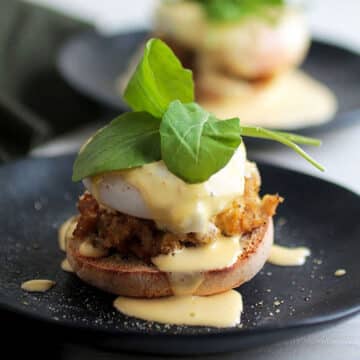
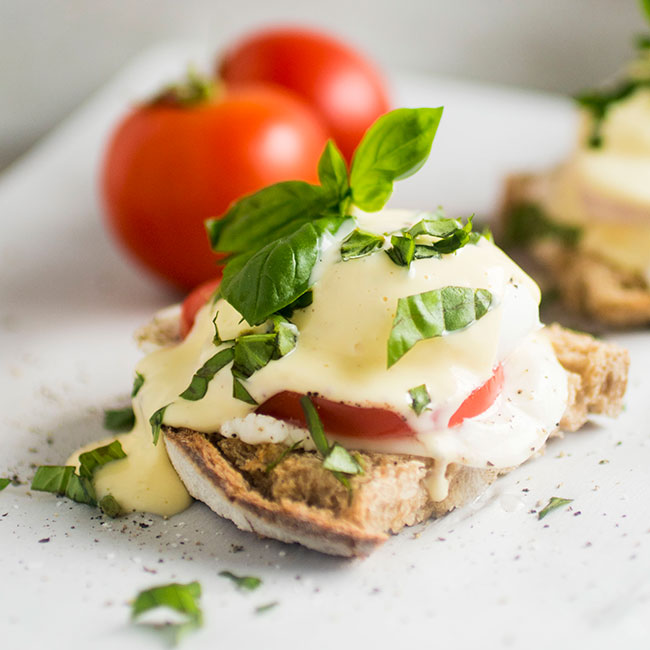

Did you make this recipe? Leave a comment and star rating below to let us know how it turned out!
📖 Recipe

Immersion Blender Hollandaise
- Prep Time: 5 minutes
- Cook Time: 5 minutes
- Total Time: 10 minutes
- Yield: Makes 1 ½ cups
- Category: Sauce
- Cuisine: French
Description
This easy, creamy hollandaise sauce is perfect over eggs Benedict or a cozy breakfast hash!
Ingredients
- 2 egg yolks, at room temperature
- 2 Tablespoons warm water (use tap water that's warm to the touch: about 90-110° F)
- 1 Tablespoon lemon juice
- pinch of kosher salt
- ½ cup (1 stick) unsalted butter
Instructions
- Add egg yolks, warm water, lemon juice, and a pinch of kosher salt to a tall, narrow cup that fits the head of your immersion blender. Blend for about 30 seconds, until you have a smooth mixture that's slightly lightened in color.
- Melt butter in a small saucepan over medium-low heat until it reaches a low simmer (about 180-185°F; bubbling, but not browning). Transfer melted butter to a small measuring cup with a spout to make it easier to pour.
- With the immersion blender running, add hot butter to egg mixture a tiny bit at a time. Blend for a few seconds in between each addition to fully incorporate the butter and let the eggs heat up slowly (if you add the hot butter too fast, the eggs can curdle). Continue adding butter a little at a time, blending well between each addition, until all butter has been incorporated and the hollandaise is thick and fluffy.
- Blend in additional warm water a teaspoon at a time until the hollandaise reaches a drizzle-able consistency. Serve immediately.
Notes
Additions and Substitutions. Add a pinch of your favorite spices (cayenne, paprika, black pepper, or nutmeg) or a teaspoon of dijon mustard to your hollandaise for extra flavor, or blend in a handful of fresh herbs (tarragon, basil, chives, parsley, or dill).
Hollandaise and food safety. Consuming raw or undercooked eggs may increase your risk of food borne illness. The USDA recommends heating all eggs to a minimum internal temperature of 160°F (note: many popular egg preparations, including poached eggs, over-easy eggs, and soft boiled eggs, do not meet this temperature requirement). To ensure your hollandaise reaches a recommended temperature of 160°F, be sure to use room temperature egg yolks and very hot butter. Use a kitchen thermometer to check the final temperature; if your hollandaise has not yet reached 160°F, you can place it in a small saucepan or skillet and cook, whisking constantly, over medium-low heat until it reaches the correct temperature. For more information on raw eggs and food safety, be sure to read through the full post above.
Nutrition
- Serving Size: 3 Tablespoons
- Calories: 116
- Sugar: 0.1 g
- Sodium: 158.8 mg
- Fat: 12.6 g
- Carbohydrates: 0.3 g
- Protein: 0.8 g
- Cholesterol: 76.6 mg


Jessie @ Life As A Strawberry
This is the only way I make hollandaise anymore. I hope you all love it as much as we do!