

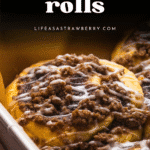
Fall's best flavors are wrapped up in these cozy apple cinnamon rolls - perfect for a holiday brunch! A homemade apple pie filling is rolled into soft cinnamon bun dough, then topped with a crispy cinnamon streusel and a drizzle of vanilla glaze.

This recipe takes a bit of effort, but the result is so worth it. We're working with four main components here:
- Cinnamon roll dough. This is a classic, soft cinnamon roll dough!
- Apple pie filling. You can prep this easy apple pie filling a few days in advance if you like.
- Crumble topping. Our go-to streusel topping adds texture.
- Vanilla icing helps us mimic the classic flavors of apple pie with a scoop of vanilla ice cream.
Read through this entire post before you start for best results! This article is full of step by step photos, tips, and best practices to help you along.
If you're new to homemade cinnamon rolls, we recommend starting with our beginner-friendly overnight cinnamon rolls or small batch cinnamon roll recipes to get a feel for the dough and the general process.
Ingredients overview
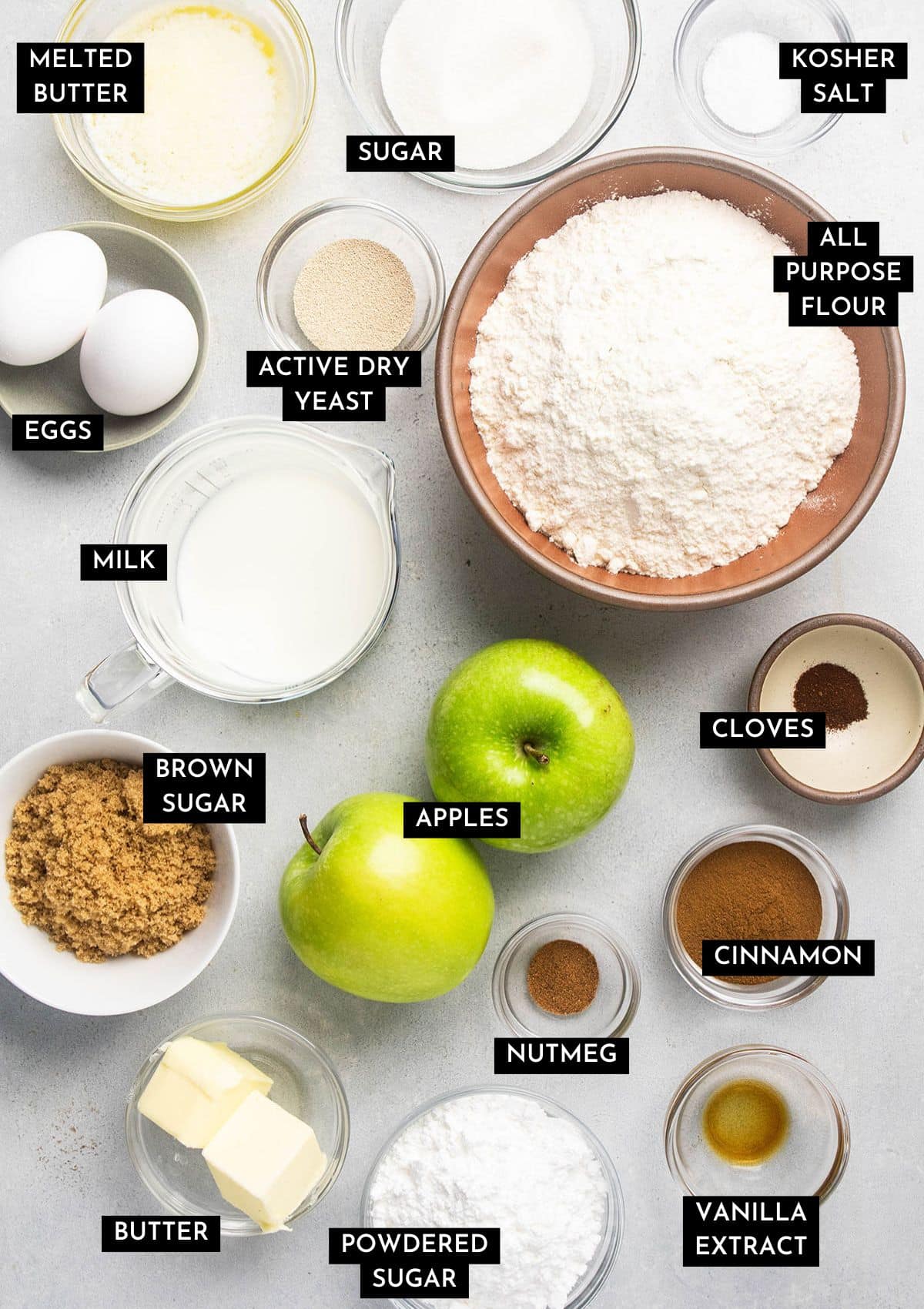
Find a full ingredients list with exact quantities in the recipe card below.
Before you start baking, we want to highlight a few important things:
- Use high quality flour. We recommend King Arthur All Purpose Flour. Its high protein content creates stronger gluten networks, which make our dough stretchy and elastic (as opposed to "sticky"). You can also use bread flour here if you like.
- Warm milk helps activate the yeast. Heat milk in a small saucepan over medium-low heat (or microwave it in 10-15 second intervals) until it's warm to the touch - about 100° F.
- Bring eggs to room temperature for half an hour on the counter before you start: They'll incorporate more smoothly into the dough and you'll get a better rise.
- Granny Smith apples provide some bright, tart contrast to all the sugar in this recipe, but you can use any apple variety you like.
Use a kitchen scale
Measuring ingredients like flour by volume (with cups) is notoriously unreliable. Because each person fills a cup of flour a little bit differently, it's easy to accidentally use too much in a recipe and end up with dry, dense dough.
But when you use a kitchen scale to measure by weight (in grams), you get a perfect measurement every time. So if you have a kitchen scale, please use it! (No kitchen scale? Measure ingredients like flour with the scoop and level method for best results!)
Variations and Substitutions
- Adjust the spices in the apple filling to suit your tastes. You can also add a pinch of cardamom or ginger if you like!
- Swap the vanilla glaze for a simple cream cheese frosting, cinnamon glaze, or maple frosting.
Step by step instructions
Make the dough

Mix sugar, active dry yeast, and warm milk together in a large bowl. Let this mixture sit for 5-10 minutes, until the surface is slightly foamy.
Lightly whisk the eggs to break them up, then stir those into the mixture along with melted butter. Add flour and kosher salt.
Pro Tip: Yeast doesn't get as foamy when you use warm milk instead of water. If you're used to proofing yeast with warm water (like in our crusty bread recipe), the bubbles here will seem less dramatic.

Stir with a sturdy spoon or spatula until the dough is fully combined. It will look shaggy and sticky at this point: That's ok!
Transfer dough to a large cutting board. Knead by hand for 5-10 minutes until the dough is smooth and no longer sticks to the board. Kneading can feel tedious, but it's important here: It makes the dough much easier to work with later. Learn more: How to knead dough.
Pro Tip: You don't need to flour the cutting board. The dough will feel sticky at first, but as you knead, the gluten will develop and the dough will get smoother. If the dough still feels sticky after a few minutes of kneading, cover and let it rest for 15 minutes, then knead again. Note: Doughs made with lower-protein flours develop weaker gluten networks; they may feel stickier and require more kneading. We recommend King Arthur Flours.
First rise (1 hour)

When the dough is smooth and elastic, return it to your mixing bowl. Cover with a clean tea towel and let rise in a warm place for one hour, until dough has puffed up slightly and the surface has smoothed out.
The dough may not fully double in size during this first rise - that's ok! Because this is an enriched dough, it rises slowly and holds its shape more than other doughs.
Make the apple filling while the dough rises
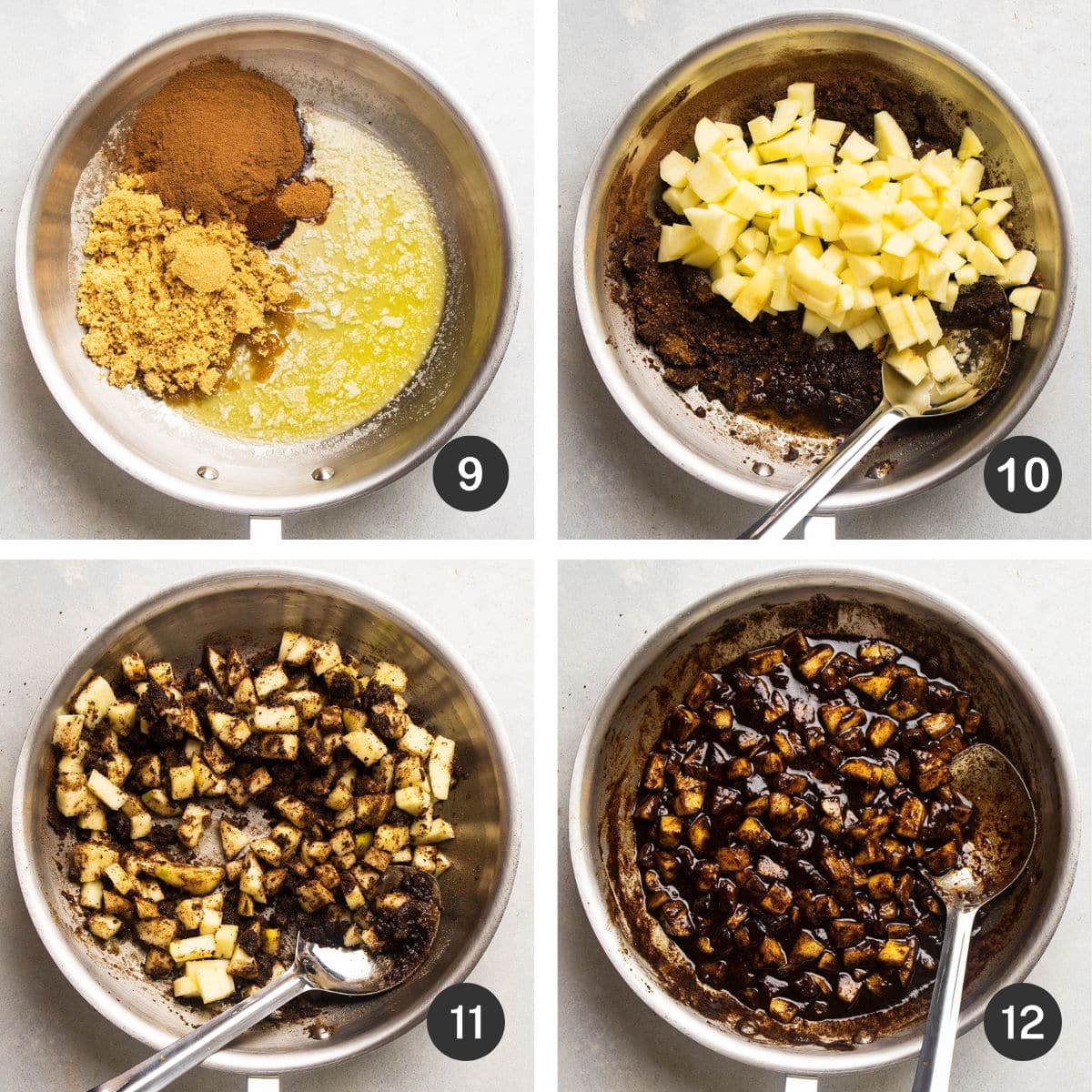
Melt butter in a large skillet over medium heat, then stir in spices and brown sugar to form a loose paste. Stir in the diced apples; cook a few minutes more until the mixture is syrupy and apples have begun to soften.
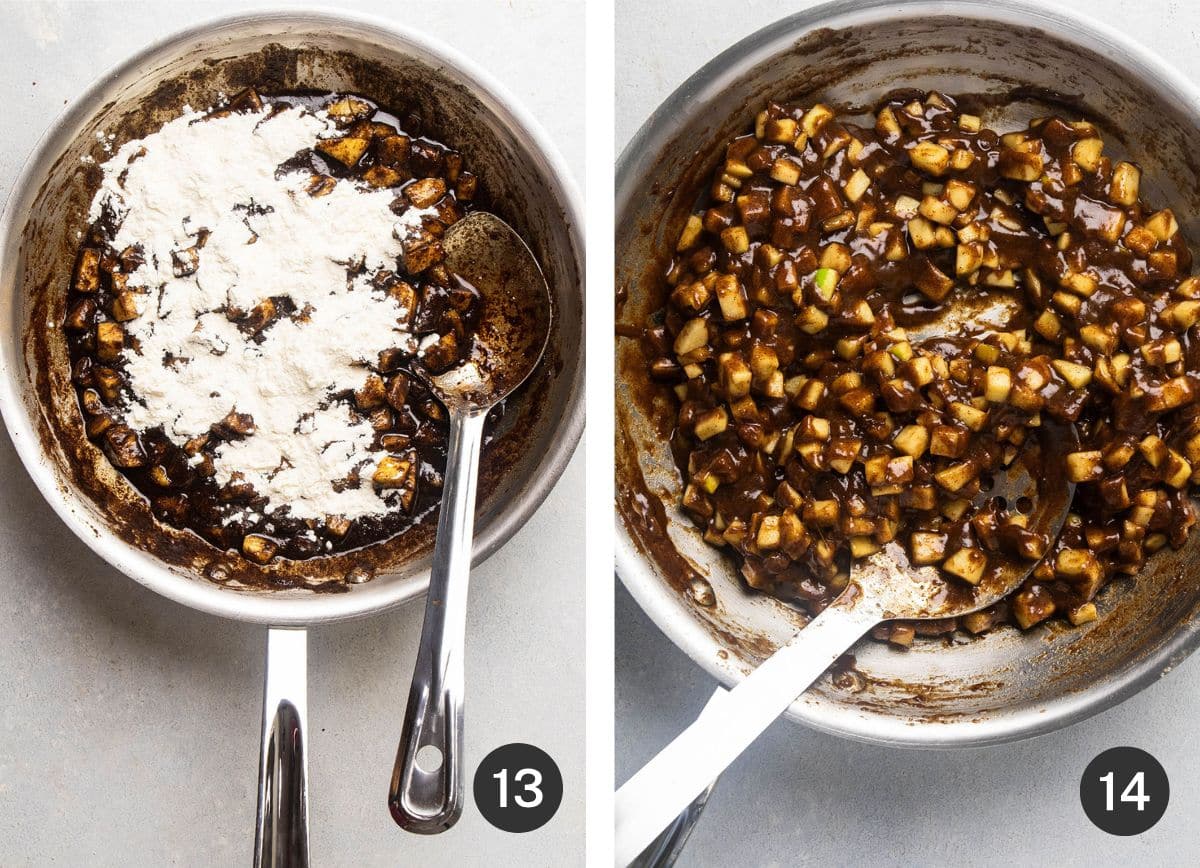
Sprinkle flour across the surface of the apple mixture and stir to combine. Cook another 2-3 minutes, until the mixture has thickened.
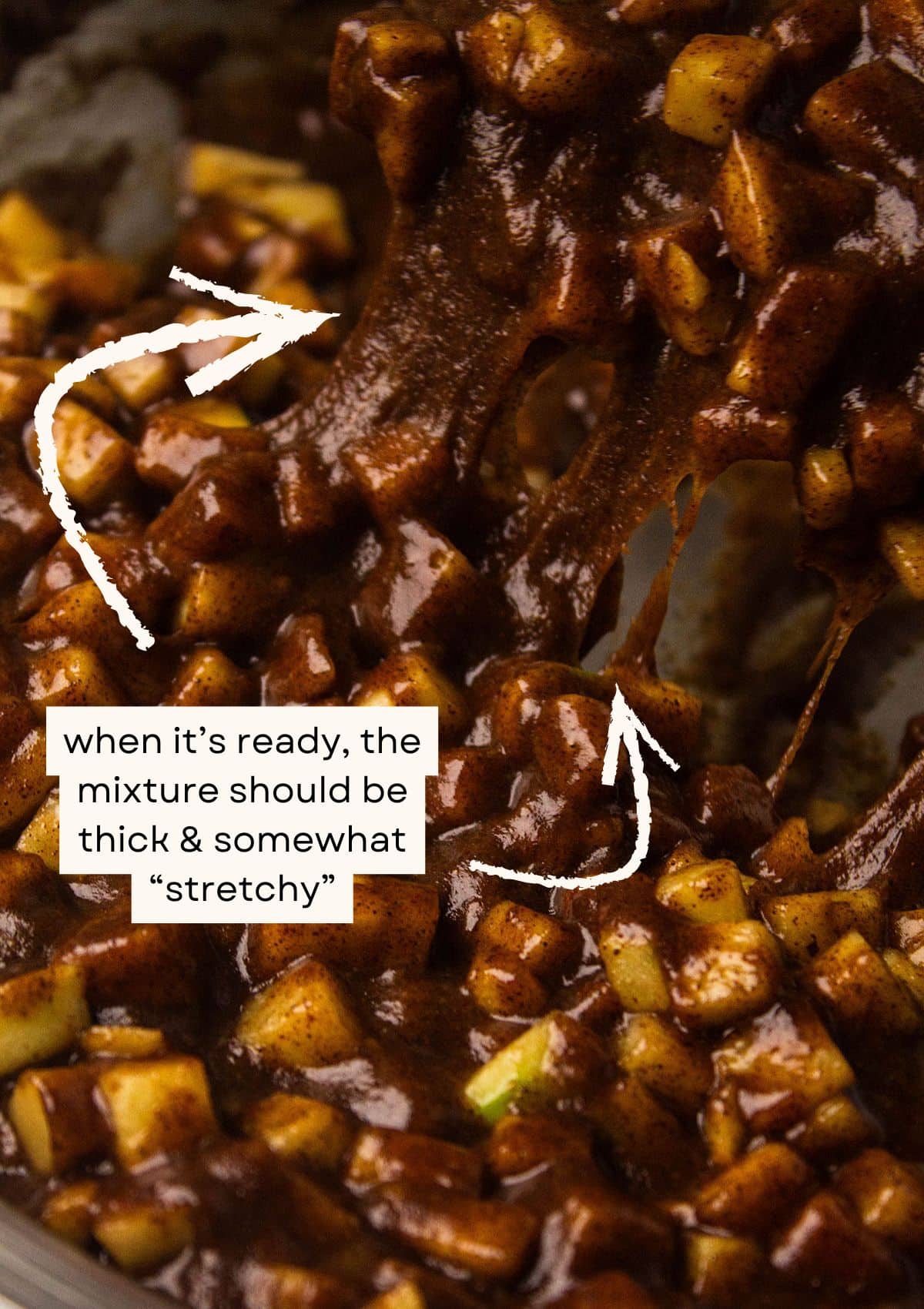
Pro Tip: When it's ready, the apple mixture should be thick and sticky, with an almost stretchy feel to it. This texture keeps the filling spreadable for gooey cinnamon rolls, while preventing it from leaking out of the final cinnamon buns too much.
Set the filling aside to cool while you prep the rest of the components and wait for the dough to rise.
Make the crumb topping
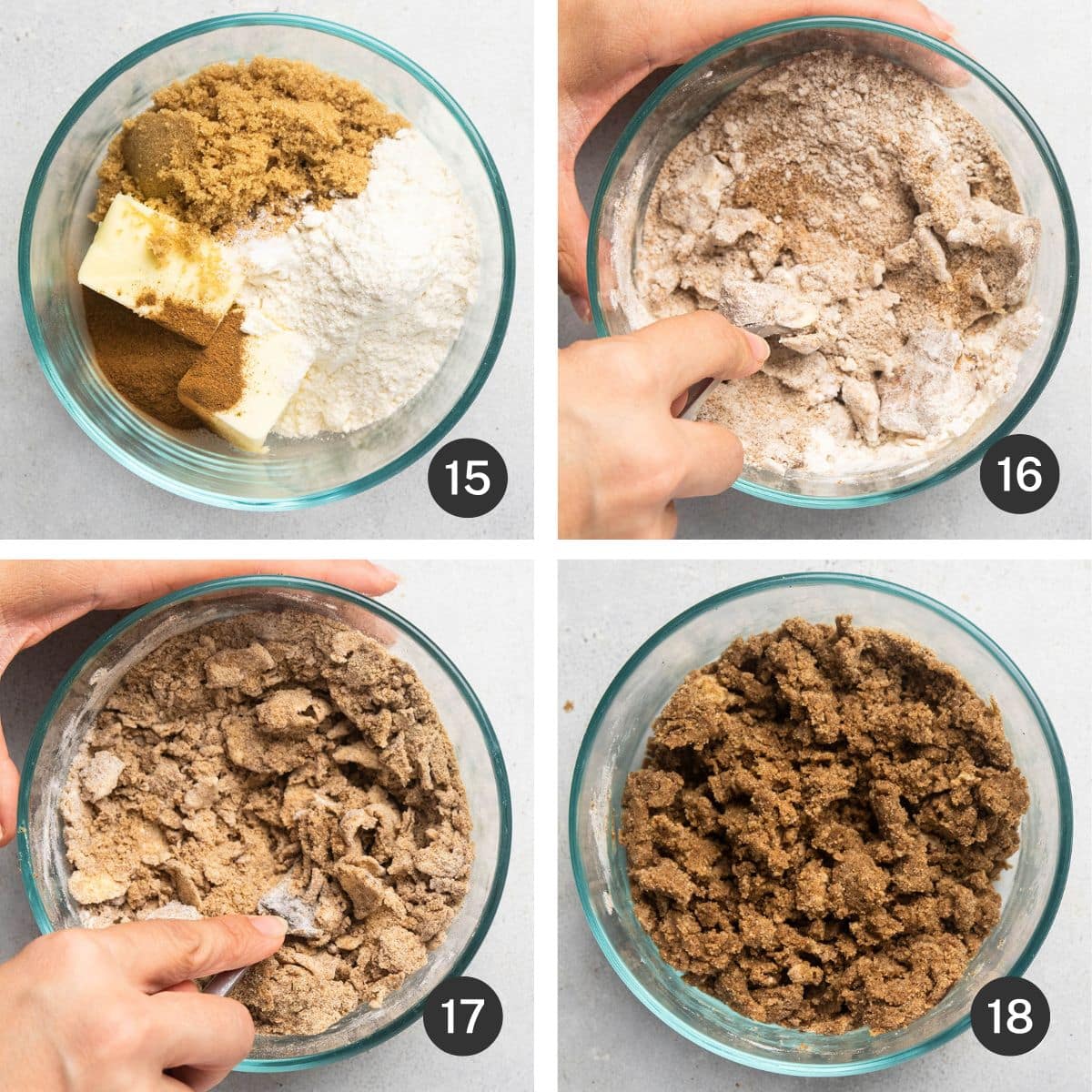
In a separate bowl, use a fork to combine room temperature butter, more brown sugar, cinnamon, and flour with a pinch of kosher salt. Take your time mixing this crumble: The goal is to fully incorporate the dry ingredients into the butter.
The crumble will start off looking sandy and light, but will darken in color as you continue to mix it. You'll know it's ready when it clumps together easily: It should hold its shape when you pinch it together between your fingers.
First time making a crumble? Read our cinnamon streusel topping post for additional step-by-step photos and a ton of helpful notes!
Assemble the cinnamon rolls
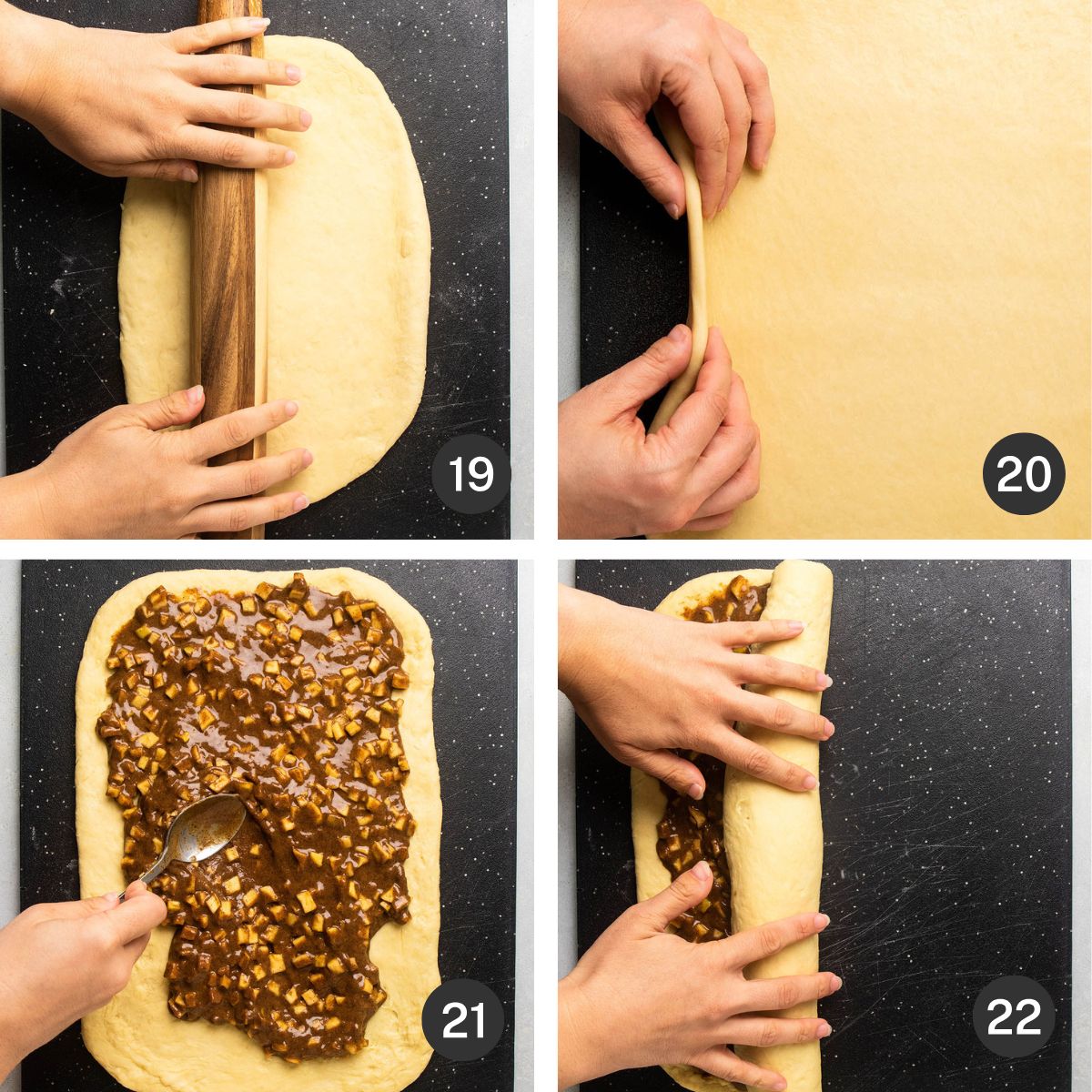
Place dough on a large cutting board and knead it a few times to work out any air bubbles. Roll it into a large rectangle, about 18 inches wide by 8 inches tall and ½ inch thick.
Spread the cooled apple pie filling over the dough, leaving about an inch of space along each edge. Carefully roll the dough into a log, pinching along the seam to seal it as best you can.
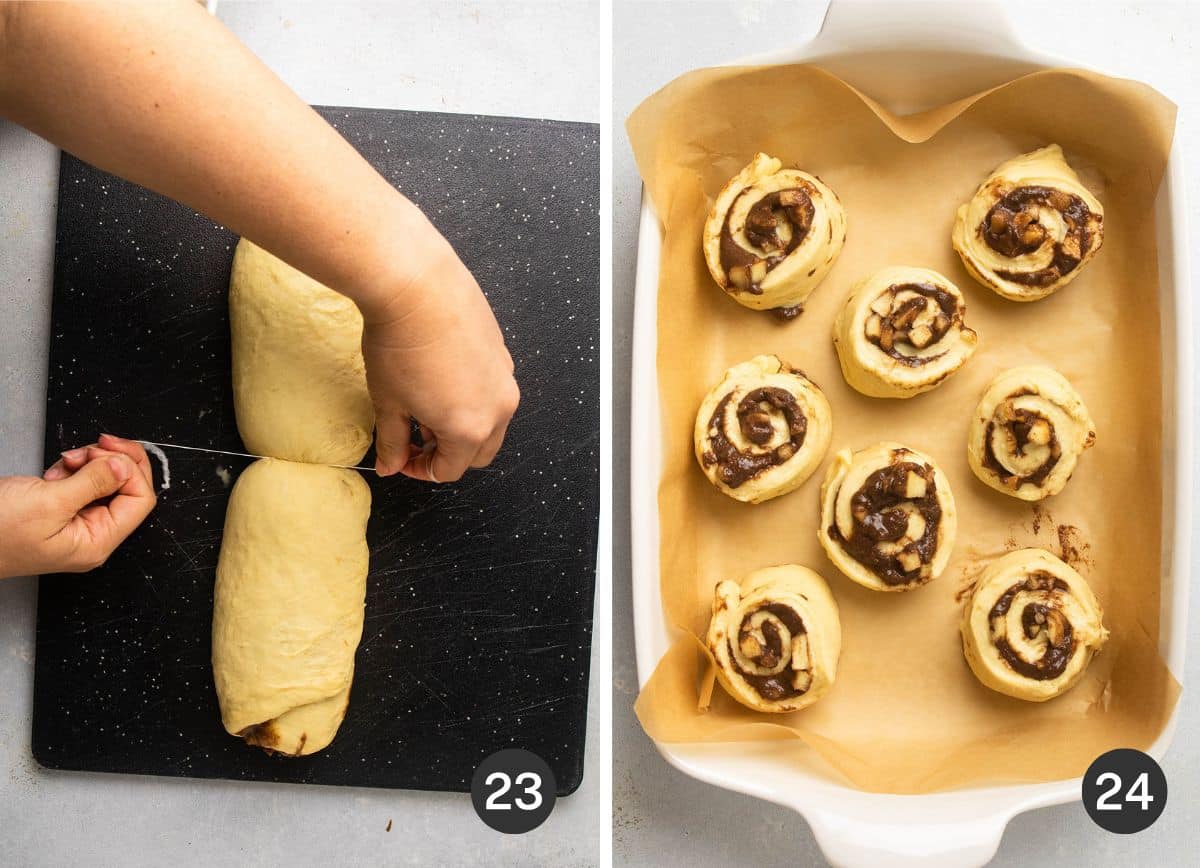
Use a piece of dental floss or a very sharp, serrated knife to cut the cinnamon rolls into 8 equally-sized pieces (about 1 ½ inches wide). This filling can get a little bit messy, so don't worry too much about making the rolls perfect - just do the best you can!
Line a 9x13" casserole dish with a piece of parchment paper, and place cinnamon rolls in the pan with an inch of space on all sides. Cover with a clean tea towel, and let rise another 30 minutes while you heat the oven.
Equipment note: We tested this recipe in 8x10" and 9x13" ceramic pans with a range of 8-12 rolls. Our testers preferred fewer, taller rolls in a larger pan: They're easier to cut and maneuver, and more space yields fluffier cinnamon rolls. We also tested this recipe in a 9x13" glass pan with good results. If you use a metal pan, you may need to reduce the bake time.
Bake
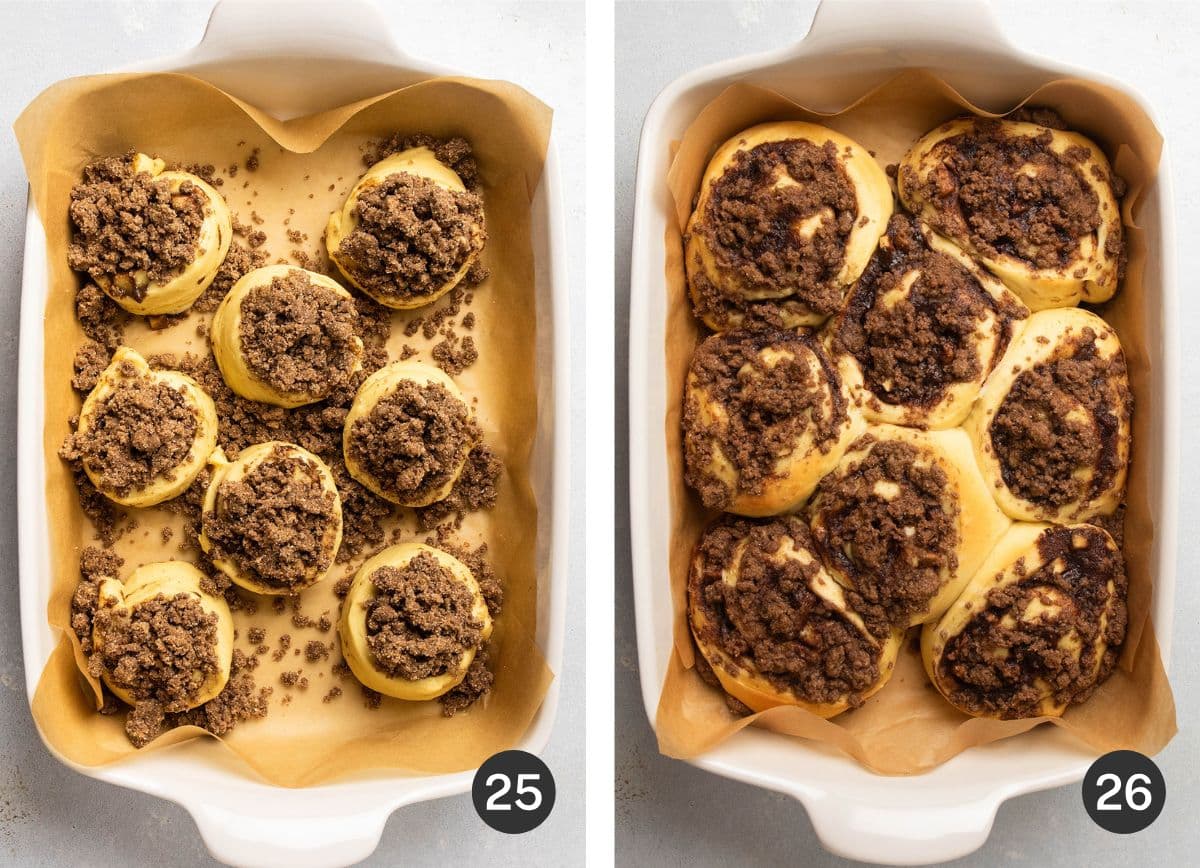
After the second rise, top each cinnamon roll with a handful of crumble topping. Don't worry if some of the crumble falls between the cinnamon rolls: They'll expand quite a bit in the oven and pick up any excess.
Transfer cinnamon rolls to the hot oven; bake until they're a light golden brown.
Pro Tip: If the cinnamon rolls start to brown too much, cover them with a piece of foil or a large baking sheet to keep them soft while they finish baking!
Make the icing
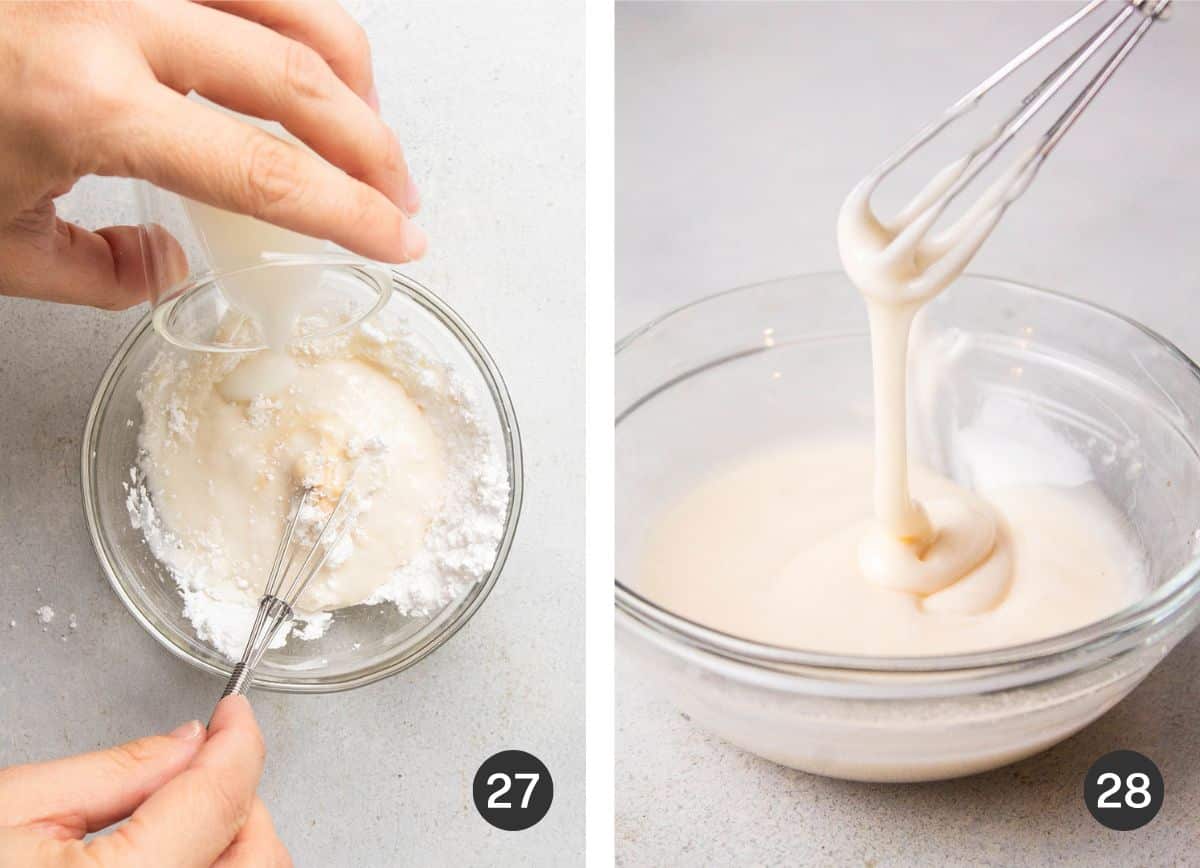
Whisk vanilla, powdered sugar, and a small pinch of kosher salt together in a small mixing bowl. Add milk a little at a time, stirring well between each addition, until you have a smooth, drizzle-able icing.
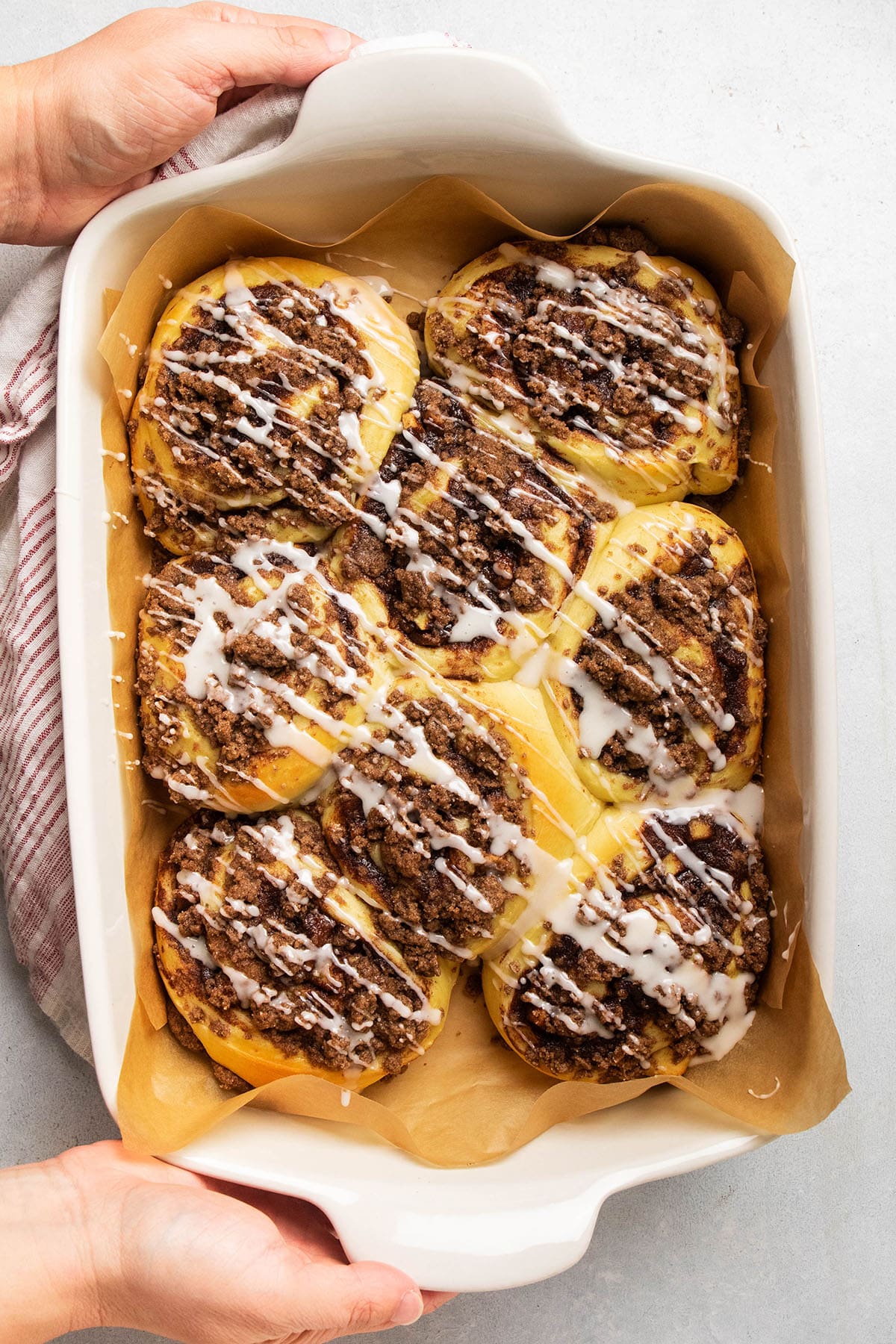
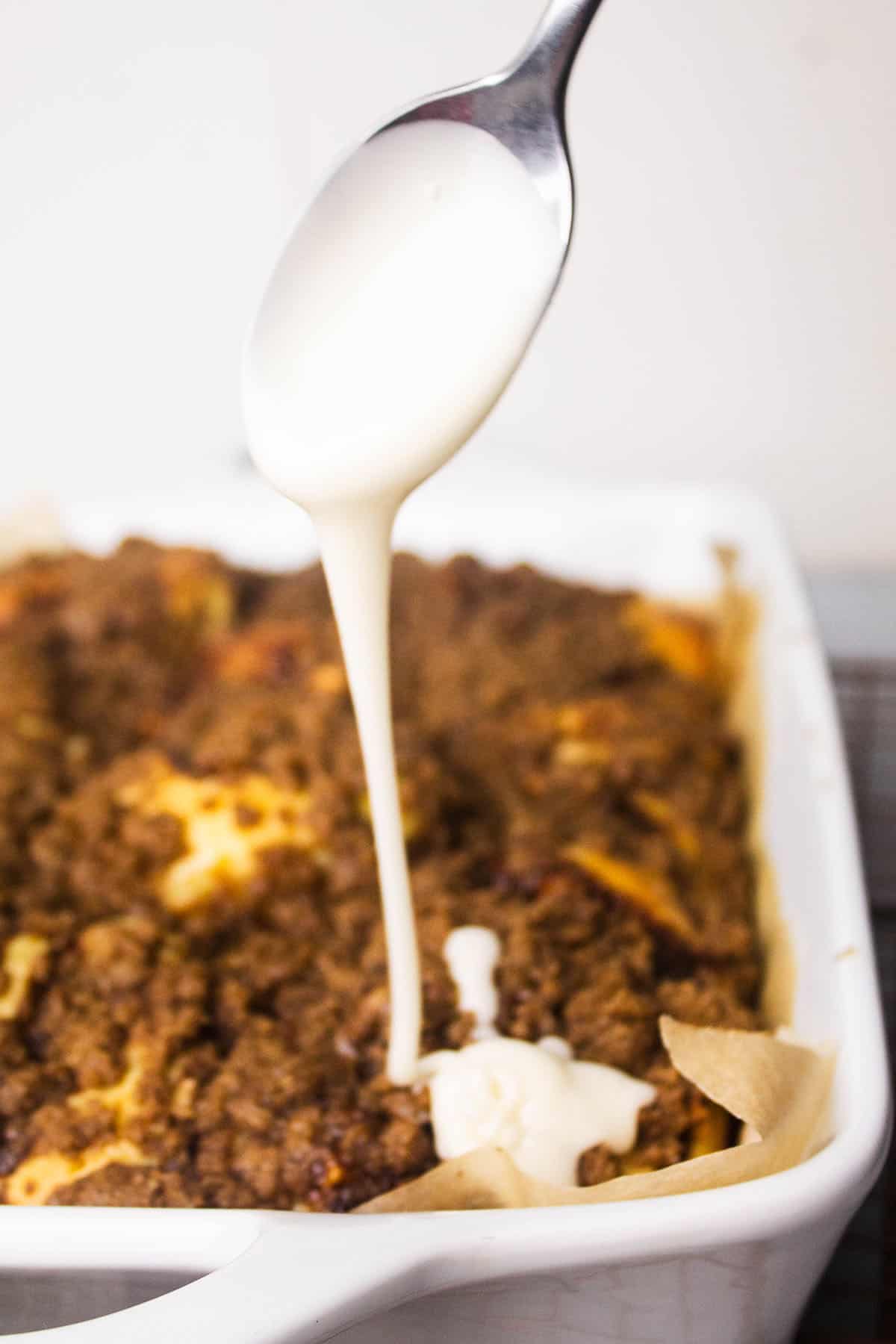
Drizzle the icing over your cinnamon rolls, then serve and enjoy!
Frosting Tip: Let cinnamon buns cool for at least 20 minutes before adding any icing (if they're too hot, the frosting will melt right off!)
Make ahead tips
There are two great options if you'd like to make these cinnamon rolls ahead of time:
- Prep the individual components. The apple pie filling, cinnamon crumble topping, and vanilla icing can all be made a day ahead of time. Store each component in the fridge, then make the dough and assemble the rolls in the morning.
- Make the full cinnamon rolls. Assemble and bake the cinnamon rolls as directed, then let them cool completely. Cover with plastic wrap or a tight-fitting lid and refrigerate overnight, then reheat them in the morning and add vanilla icing just before serving. Note: Never put a cold pan into a hot oven, as it can shatter.
Storing leftovers
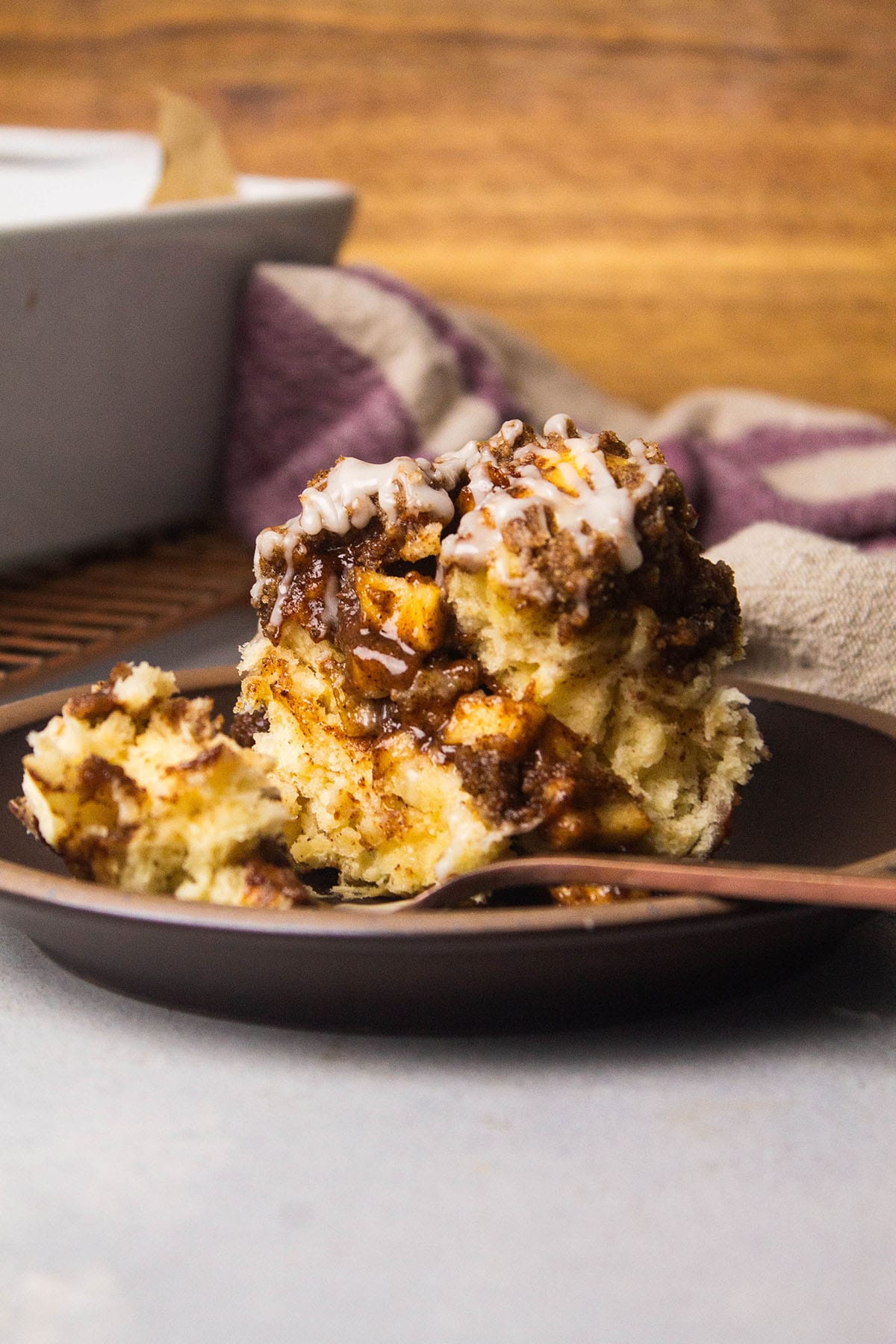
Keep cooled leftover cinnamon rolls in an airtight container in the fridge for up to 3 days. Reheat in a 325°F oven for a few minutes (we love to serve leftover warm rolls with an extra drizzle of vanilla glaze!)
FAQs
We tested this recipe in a few different pans, and ultimately decided we preferred the results with fewer cinnamon rolls in a larger pan size. Larger cinnamon rolls were easier to cut and move around - especially useful since the apple pie filling here can be a little messy - and giving them some extra space in the pan yielded the most fluffy cinnamon rolls.
In the photos above, we made 8 large cinnamon rolls in a 9x13" ceramic pan. But you can switch up the pan and/or make more, smaller cinnamon rolls if you like!
In the images below, we squeezed 12 cinnamon rolls into an 8x10 pan. You can see the final rolls were a bit taller and more squished together (but they were still DELICIOUS): 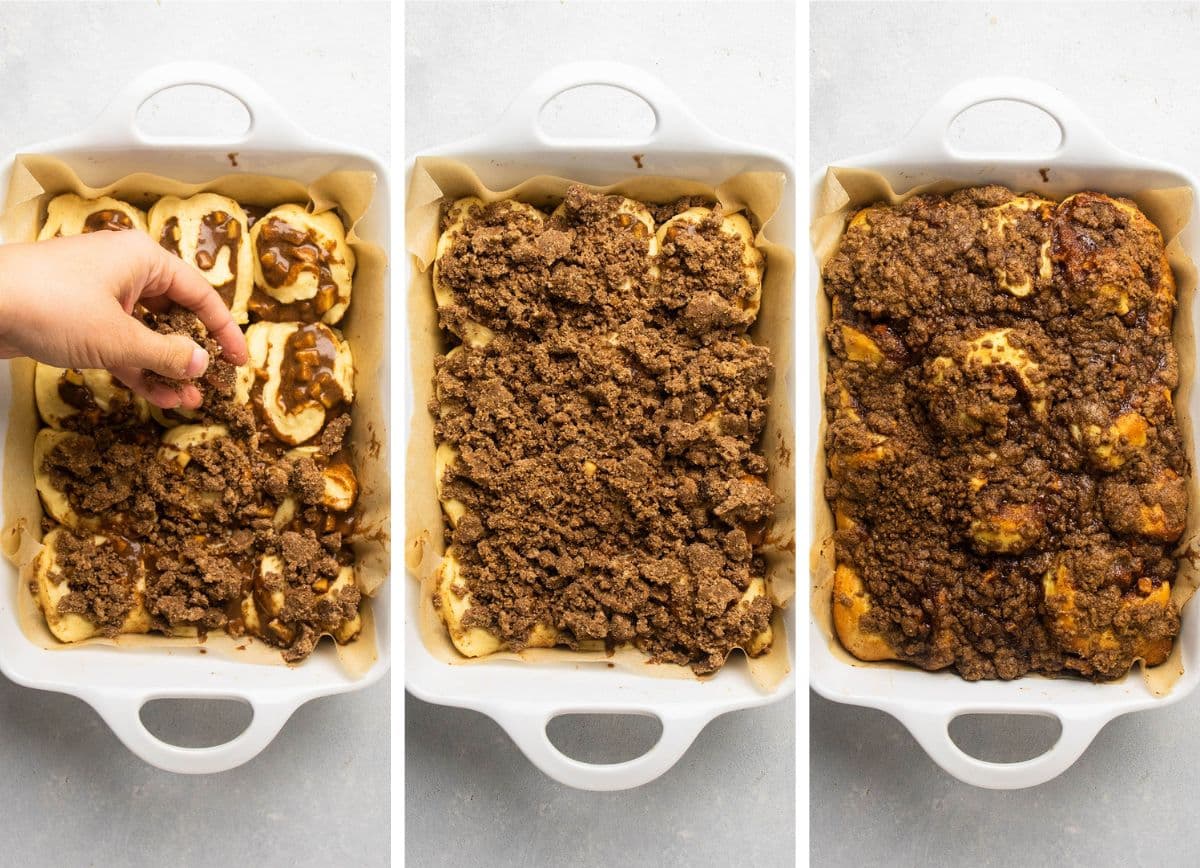
If your cinnamon roll dough sticks to your cutting board and hands, it's likely because the dough needs more gluten development. This problem occurs when 1) The dough wasn't kneaded enough and/or 2) A low-protein flour was used.
Strong gluten networks let you roll this dough out without needing any additional flour to prevent it from sticking. For best results, knead the dough until it is smooth and no longer sticky, and use a high quality, high protein flour like King Arthur All Purpose Flour. Bob's Red Mill All Purpose flour is also a solid choice, as are most bread flours.
If you're new to homemade yeast doughs, we recommend mixing and kneading the dough by hand the first few times so you can get a feel for how it should look and feel at every stage. If you are struggling to knead the dough (if it feels like it isn't getting any smoother, or like it's too tough to knead easily) cover it and let it rest for 15 minutes, then try kneading it again. With stand mixers, in particular, it can seem like the dough is still sticky even though you've kneaded it with the dough hook - in this case, we recommend letting the dough rest for 15 minutes, and then kneading it by hand until smooth.
To learn more about how gluten affects your yeast doughs - and for exclusive recipes that help you take your baking to the next level - check out our Everyday Artisan Bread online course.
Yes - you can use a stand mixer fitted with a dough hook attachment to mix the dough for this apple pie cinnamon rolls recipe.
Keep in mind that some mixers struggle to properly knead enriched doughs, and the bowl of a stand mixer can often trap some flour under the dough at the bottom of the bowl. For best results, we recommend kneading the finished dough for a few minutes by hand even if you use a stand mixer to make it.
If you’re new to baking with yeast, we always recommend making dough by hand the first few times so you can get a feel for what it should look and feel like (that way, when you transition to using a stand mixer, you’ll be quick to notice when something’s wrong and can easily adapt!)
For the softest, richest cinnamon roll dough (and the best flavor!) we recommend using whole milk. We have also tested this recipe with 1% and 2% milk, both of which work perfectly fine - the dough just isn't quite as soft and fluffy as it is when you use whole milk.
If you would like to keep the tops of your cinnamon rolls even softer, you can brush them with a layer of heavy cream before adding the cinnamon crumble and baking (we use this method in our small batch cinnamon rolls).
We haven't tested this recipe with canned apple pie filling. But if you don't have time to make the apple pie filling from scratch, we expect that canned or pre-made apple pie filling will work fine here, as long as it's quite thick.
Did you make this recipe? Leave a comment and star rating below to let us know how it turned out!
📖 Recipe

Apple Pie Cinnamon Rolls
- Prep Time: 1 hour
- Cook Time: 40 minutes
- Total Time: 3 ½ hours
- Yield: Makes 8-10 1x
- Category: Breakfast
- Cuisine: American
Description
These cozy apple cinnamon rolls are perfect for fall! With a soft cinnamon bun dough, apple pie filling, and a cinnamon crumble topping.
Ingredients
For the dough:
- 120 grams milk (½ cup), warmed to about 100° F
- 9 grams active dry yeast (2 ¼ teaspoon)
- 75 grams sugar (⅓ cup)
- 2 eggs, at room temperature
- 72 grams unsalted butter (5 Tablespoons), melted
- 360 grams all purpose flour (about 3 cups)
- 3 grams kosher salt (½ teaspoon)
For the apple pie filling:
- 56 grams unsalted butter (4 Tablespoons)
- 100 grams brown sugar (½ packed cup)
- 18 grams ground cinnamon (3 Tablespoons)
- ¼ teaspoon ground cloves (1 gram)
- ¼ teaspoon ground nutmeg (1 gram)
- Pinch of kosher salt
- 2 granny smith apples, peeled and finely diced (335 grams)
- 30 grams flour (¼ cup)
For the crumble topping:
- 80 grams brown sugar (⅓ packed cup)
- 60 grams flour (about ½ cup)
- 7 grams cinnamon (1 Tablespoon)
- 70 grams unsalted butter (5 Tablespoons), softened to room temperature
- Pinch of kosher salt
For the vanilla glaze:
- ¼ teaspoon vanilla extract (1 gram)
- 75 grams powdered sugar (¾ cup)
- 30 grams milk (2 Tablespoons) - you may not need it all
Instructions
Make the dough:
- Stir warm milk, yeast, and sugar together in a large mixing bowl. Let it sit for 5-10 minutes, until the surface of the mixture is slightly foamy.
- Crack the eggs into a separate small bowl and whisk with a fork to break them up. Add whisked eggs to the yeast mixture, along with the melted butter. Stir everything together (it doesn't need to be completely uniform - just get it started!)
- Add flour and kosher salt. Use a wooden spoon or sturdy spatula to stir until the dough is fully incorporated and no dry flour remains. The dough may seem a little shaggy or sticky here - that's ok!
- Transfer dough to a large cutting board. Knead by hand for 5-10 minutes, until you have a smooth dough that no longer sticks to the board. You shouldn't need to flour the cutting board here: The dough will feel sticky at first, but as you knead, the gluten will develop and the dough will smooth out and become more elastic. Pro Tip: Place a damp cloth under your cutting board to help anchor it to the counter so it doesn't slip around.
- Return the dough to your mixing bowl. Let it rise in a warm place for 1 hour, until the dough has nearly doubled in size. While the dough is rising, make the filling.
Make the filling while the dough rises:
- Melt butter in a large skillet over medium heat. Add brown sugar, cinnamon, cloves, nutmeg, and a pinch of kosher salt to form a sandy mixture.
- Stir in diced apples. Cook 5-7 minutes, until the mixture is syrupy and the apples have begun to soften.
- Sprinkle flour over the apple mixture; stir to combine. Cook 2-3 more minutes, until the mixture is thick and feels almost stretchy when you stir it. Turn off the heat and let the apples cool while you prep the rest of the components.
Make the crumble:
- Add brown sugar, flour, cinnamon, softened butter, and a pinch of salt to a small mixing bowl.
- Use a fork to slowly mash all ingredients together. The mixture will look sandy at first; as you continue working the dry ingredients into the butter, it will darken and form larger, stiffer clumps. The crumble is ready when you can pinch it together between your fingers and it holds its shape.
Assemble the rolls:
- Line a 9x13" baking dish with a piece of parchment paper. Set aside.
- Tip dough out onto a large cutting board. Gently stretch the dough into a rough rectangle shape, then use a rolling pin to roll it out to about 18" wide by 8" tall, and ½" thick. It doesn't have to be perfect!
- Spread apple filling in an even layer over the surface of the dough. Leave about an inch of space around each edge.
- Gently roll the dough into a log, starting on the farthest long edge and moving slowly towards the front. Try to roll the dough into as tight a log as possible - this will help the cinnamon rolls keep their shape. Gently press along the seam to help the log stay together, then roll the log over so it is seam-side down on the cutting board.
- Use dental floss or a sharp knife to cut the dough into 8-10 evenly-sized rolls, each about 1 ½ inches thick.
- Arrange cinnamon rolls in your prepared baking dish, leaving an inch or so of space between each one. Cover with a clean tea towel, and let rise another 30 minutes while you preheat the oven.
- Heat oven to 350° Fahrenheit.
- Gently place a handful of cinnamon crumble topping over each cinnamon roll. Transfer the pan to the preheated oven. Bake at 350°F for 30-35 minutes, until lightly browned.
- Let cinnamon rolls cool directly in the pan for at least 20 minutes before adding the vanilla glaze.
Make the vanilla glaze:
- Add vanilla and powdered sugar to a small mixing bowl. Slowly whisk in milk, a teaspoon or so at a time, until you have a smooth, drizzle-able consistency. You may not need all of the milk!
- Drizzle a light layer of vanilla glaze over the cinnamon rolls, then serve and enjoy!
Notes
Please use a kitchen scale! Measuring dry ingredients - especially flour - by volume (with cups) is notoriously unreliable. For best results, use a kitchen scale to measure by weight using the gram measurements provided above. Note: Some kitchen scales struggle with small quantities (such as ¼ teaspoon of vanilla, which is about 1 gram); we recommend measuring anything under 4 grams by volume and have provided those measurements above.
High quality flour makes a huge difference. We test all our recipes with - and highly recommend - King Arthur All Purpose flour, which has a high protein content that results in smoother, more elastic dough. Bread flour also has a high protein content and will work in this recipe. Lower protein flours produce less gluten, which can make your dough stickier or more difficult to work with, even after kneading.
If you are struggling to knead the dough (if it feels like it isn't getting any smoother, or like it's too tough to knead easily) cover it and let it rest for 15 minutes, then try kneading it again. With stand mixers, in particular, it can seem like the dough is still sticky even though you've kneaded it with the dough hook - in this case, we recommend letting the dough rest for 15 minutes, and then kneading it by hand until smooth.
The filling can be a little messy - take your time to roll the cinnamon rolls as tightly as possible, and don’t worry if some of the filling squeezes out the end!
Nutrition
- Serving Size: 1 large cinnamon roll
- Calories: 590
- Sugar: 44.3 g
- Sodium: 220.6 mg
- Fat: 22.1 g
- Carbohydrates: 91.3 g
- Protein: 8.9 g
- Cholesterol: 100.1 mg
Comments
No Comments